
 080-9101-8351
 LINEで簡単お問い合わせ
ブログ
詠春拳の基本ータンサオの使い方ー

詠春拳のタンサオとは
詠春拳の「タンサオ(Tan Sao)」(攤手)は、中国武術の詠春拳における基本的な防御技術の一つで、「攤」は「広げる」「伸ばす」という意味があります。この動作は、腕を前方に伸ばし、相手の攻撃をコントロールまたはそらすことを目的としています。詠春拳の基本の3手は「タンサオ」「ボンサオ」「フクサオ」であり、詠春拳の技術の中核をなす手の形になります。タンサオは具体的には、肩から肘、そして指先にかけて直線的に力を伝える形状をとり、肘を中心にして自然な角度を維持しながら、攻撃の軌道を変えたり、衝撃を吸収します。手のひらを上に向け、プレートを手のひらで運ぶような形をもう少し伸ばしたような腕の形になります。曲げ過ぎず、伸ばしすぎず適度に伸ばした形になります。
Tan Sao is one of fundamentals on wing chun technique mainly for defense. Tan means spreading or extending. This technique aims to control or deflect the opponent’s attack by extending your arm forward. The three fundamental hand techniques of wing chun are Tan Sao, Bong Sao, and Fuk Sao, and they form the core foundation of wing chun’s technical system. Specifically, the Tan Sao takes a form that transmits force in a straight line from the shoulder through the elbow to the fingertips. It maintains a natural angle centered around the elbow, allowing it to redirect the path of an attack or absorb impact effectively. The arm takes a slightly extended shape, as if carrying a plate with the palm facing upward. It should be moderately extended—neither too bent nor fully straightened—maintaining a balanced, natural posture.
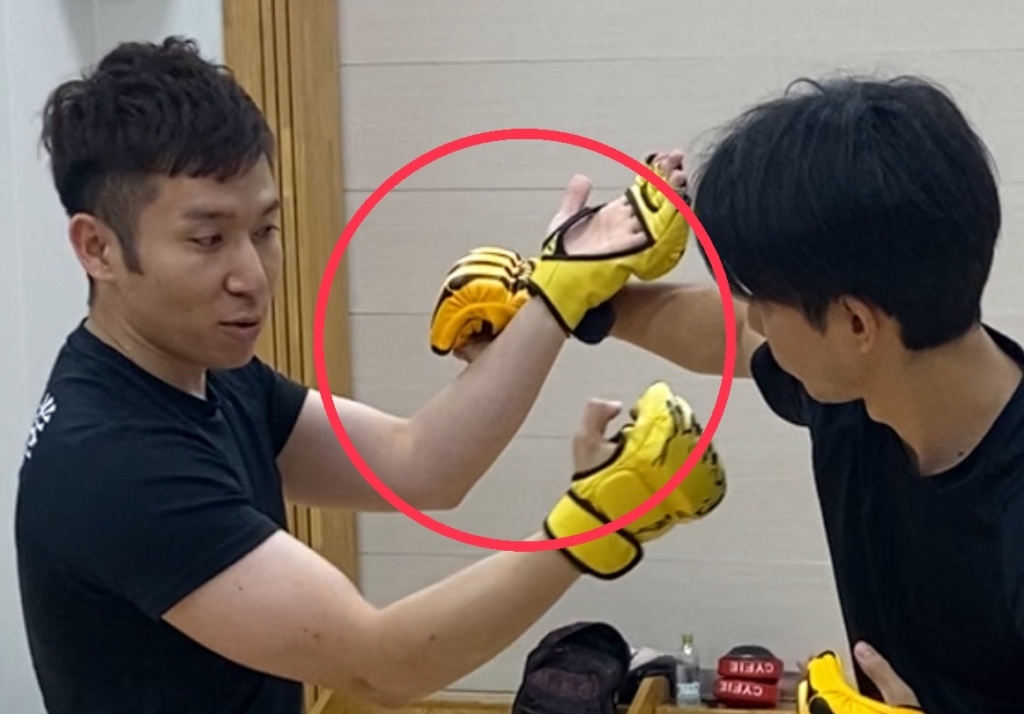
In the photo above, you can use Tan Sao to defend against an incoming hook. As shown, the left hand executes the Tan Sao while the right hand delivers a punch simultaneously. This technique is often referred to as Tan Da or simply a Tan Sao Punch. It's important to remember that Wing Chun is based on the principle of simultaneous attack and defense.
タンサオは、手のひらを上向きにし、親指を軽く内側に丸める形で行います。肘は軽く曲げ、肩の力を抜いてリラックスさせることが重要です。このポジションによって、力を相手に直接受け流すのではなく、柔軟にそらすことが可能になります。タンサオは特に、直線的に飛んでくる攻撃(パンチや突きなど)を受け流すために使用されます。相手の攻撃の軌道を外側にずらすことで、攻撃を無効化し、カウンターを狙う準備を整えます。タンサオは、防御にとどまらず、他の技とスムーズに連携することが可能です。たとえば、タンサオの後にパンチや崩し技を組み合わせることで、攻防一体の動きを実現します。
Tan Sao is performed with the palm facing upward and the thumb gently curled inward. The elbow remains slightly bent, and it is essential to relax the shoulder, keeping it free of tension. This posture allows force to be deflected rather than absorbed directly, enabling a flexible redirection of the opponent’s energy. Tan Sao is particularly effective against linear attacks, such as straight punches or thrusts. By guiding the opponent’s strike off its original path and toward the outside, the technique neutralizes the attack and sets the stage for a counter. Moreover, Tan Sao is not limited to defense alone—it integrates smoothly with other techniques. For example, following Tan Sao with a punch or a destabilizing move allows for fluid transitions that embody Wing Chun’s core principle of simultaneous offense and defense.
詠春拳のタンサオは汎用性が高い
詠春拳という武術はとても直線的な動きに基づいて行われますが、タンクサオという技術は相手の外側に流しながら入ったり(下の写真の通り)、逆にインコースで直線的に入ったりと汎用性が高い防御方法であると言えます。タンサオは例えば相手のフックに対して、それを受けるということが代表的な使い方でしょう。もちろんストレートに対してタンサオで外側に受け流すことも多いです。下の写真でわかるように、右手でタンサオを出して相手のアウトコースに入っています。守り方は、手のひらを上に向けながら腕を体の中心からまっすぐ出していきます。円を描きながら守るというものではないので、あくまで直線的という形を意識してみましょう。
Wing Chun is a martial art rooted in highly linear movements, and Tan Sao exemplifies this principle while also offering notable versatility. Despite its straightforward nature, Tan Sao can be applied both by redirecting an opponent's attack to the outside—creating an opening for entry, as seen in the photo below—or by cutting straight through on the inside line to intercept an attack directly. This makes it a highly adaptable defensive technique. One of the most common applications of Tan Sao is to intercept a hook, guiding it away while maintaining structure and balance. It's also frequently used to deflect straight punches outward, disrupting the opponent’s attack while setting up a counter. As shown in the photo, the practitioner uses the right hand to perform Tan Sao, stepping into the opponent’s outside angle. The correct execution involves extending the arm straight out from the centerline of the body, with the palm facing upward—it's not a circular or sweeping motion, but rather a direct and linear movement. Maintaining this structure is key to both effective defense and smooth transitions into offensive techniques.
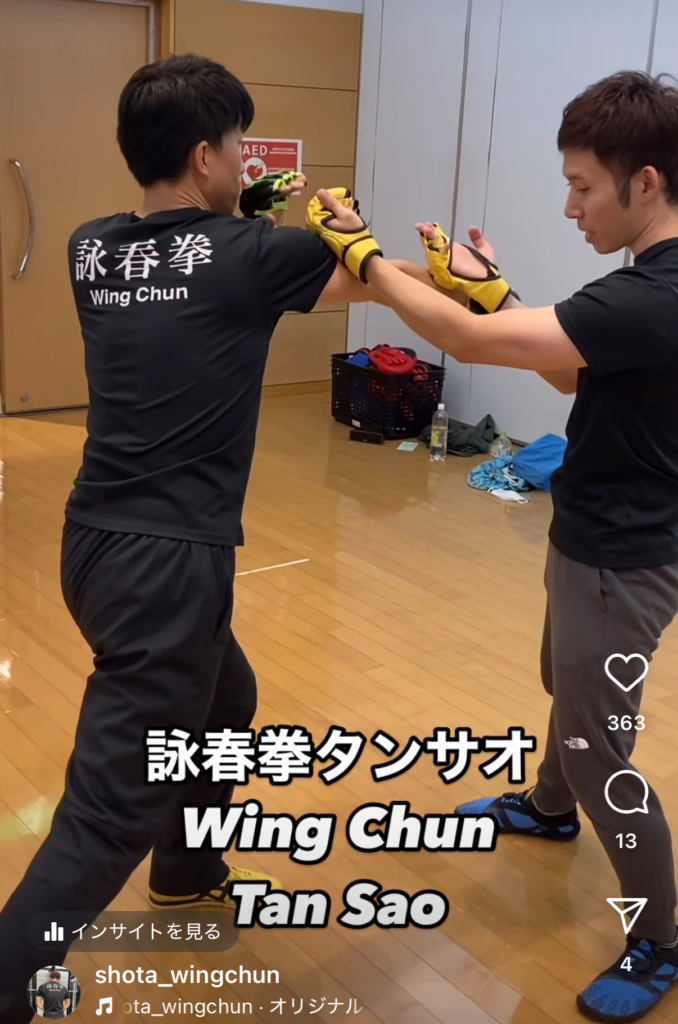
ただ、タンサオは防御の方法としてはかなり有効な手段でありますが、詠春拳は攻防同時が理想ですので、防御をし終わってから攻撃に移るというスタイルではなく、防御と攻撃がほぼ同時に行われるようにしたいのです。つまり、タンサオと同時にストレートパンチも打ちたいのです。タンサオは、詠春拳のシンプルかつ効果的な防御技術の象徴であり、適切なタイミングと正しい形で使用することで、攻撃をいなす柔軟性と防御力を高めることができます。この技をマスターすることで、詠春拳の基本がさらに深まります。繰り返し練習をしていきましょう。
While Tan Sao is a highly effective defensive technique in Wing Chun, it’s important to remember that the ideal in this martial art is simultaneous offense and defense. Rather than first blocking an attack and then launching a counter, Wing Chun emphasizes executing both actions at the same time. In practice, this means delivering a straight punch simultaneously with the Tan Sao. This integration of defense and attack reflects the core philosophy of Wing Chun—efficiency, directness, and economy of motion. Tan Sao is a symbol of Wing Chun’s simplicity and effectiveness in defense; when applied with proper timing and structure, it not only deflects incoming strikes but also creates openings for immediate offense. Mastering this technique deepens your understanding of Wing Chun fundamentals and builds the foundation for more advanced skills. Consistent, mindful repetition is key—so keep practicing with precision and intent.

Tan Sao is also frequently used to defend against backfists. When dealing with attacks coming from the outside, Tan Sao proves to be a highly effective method of defense.
福岡県にお住まいの皆様。もしもの時、自分や大切な人を守るために護身術を学びたいと考えたことはありませんか?詠春拳は、無駄な力を使わず、相手の攻撃を流してコントロールする実戦的な武術です。映画『イップ・マン』でも描かれたように、詠春拳は小柄な人でも相手を制することができる合理的な技術が特徴です。当教室では、初心者の方でも安心して学べるよう、一つひとつの技を丁寧に指導します。特に女性や運動が苦手な方でも習得しやすく、護身術としての活用にも最適です。しかも、料金は1回あたり1,000円と通いやすい価格設定。あなたも詠春拳を通じて、自信と強さを手に入れませんか?ただいま無料体験レッスン受付中!
| 月謝(会員) | 4000円 |
| 都度払い(会員) | 1200円 |
| ビジター(非会員) | 2000円 |
| 個人レッスン(1時間) | 5500円 |
日時
毎週水曜日19:30-21:00
場所
福岡県久留米市大石町272-5
京町コミュニティセンター 多目的ホール
無料駐車場あり
お問い合わせはこちらのLINEまで⇩

